

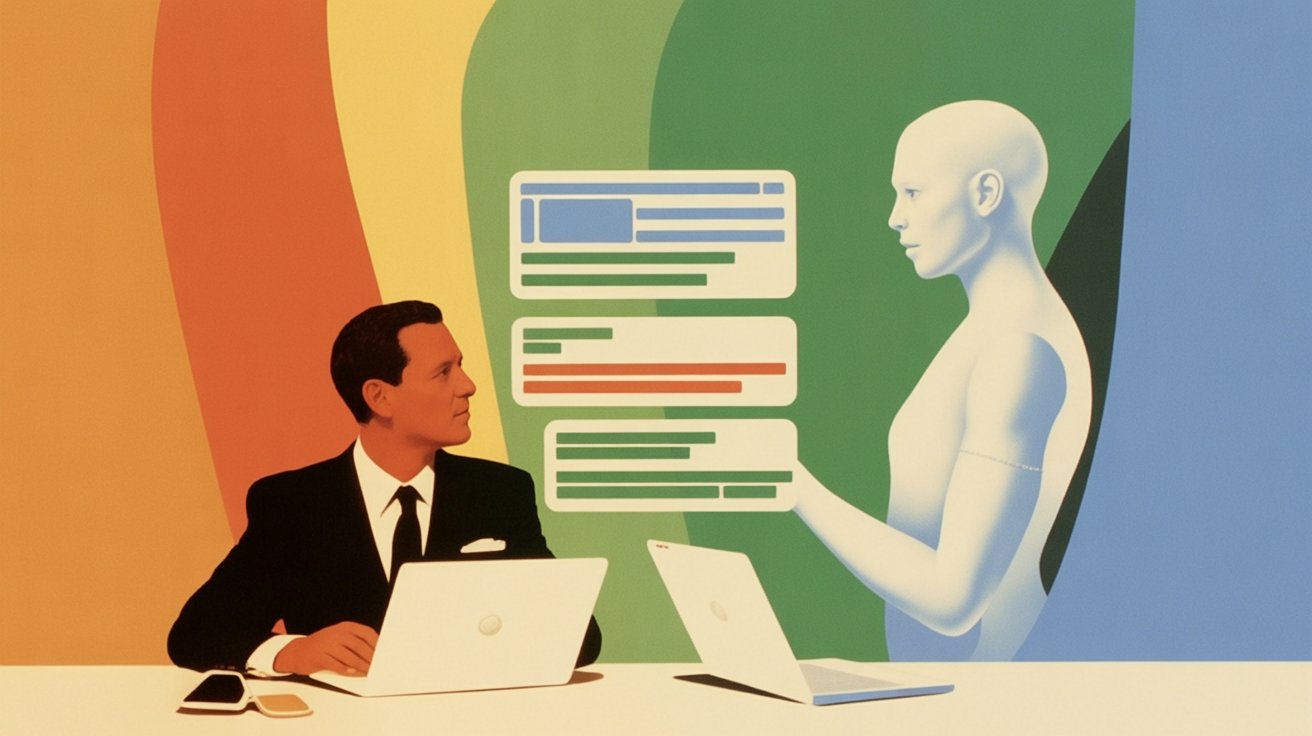
For the last two years, businesses have been using AI like this:
Write a post.
Generate an email.
Summarize a document.
Helpful.
But limited.
Because that’s not where AI is going.
This week made that clear.
AI is no longer just helping you create.
It’s starting to act on your behalf.
And that changes everything.
Across multiple platforms, a pattern is emerging.
AI is evolving into something much bigger than a content assistant.
It’s becoming a digital extension of your business.
Instead of asking AI to do tasks one by one, systems are now:
• coordinating across multiple tools
• remembering brand preferences
• executing workflows automatically
• making decisions based on context
This is what’s being called “agentic AI.”
And it’s the foundation of the digital twin.
Recent developments confirm this shift.
Platforms like Canva are introducing features like:
• “Agentic orchestration” (multi-step execution)
• “Living Memory” (brand learning over time)
• direct integrations across tools
At the same time:
• AI ad platforms are predicting winning creatives before spend
• local search AI is interpreting reviews and intent
• AI assistants are handling real business operations (calls, scheduling, follow-ups)
This is no longer about generating content.
Most businesses are still using AI at the lowest level.
They’re:
• writing content
• generating captions
• experimenting occasionally
But they’re not building systems.
AI feels useful — but not transformative.
A business uses AI for posts, but still manually handles:
• leads
• follow-ups
• scheduling
• communication
They save time — but don’t scale.
They’re using AI as a tool, not as a system.
And that’s where the gap begins.
After analyzing recent trends, the pattern is clear.
The businesses winning with AI are not using it more.
They’re using it differently.
They are:
• systemizing workflows
• connecting tools
• automating decisions
• building continuity
They’re creating a digital twin.
| Manual Business | AI Digital Twin |
|---|---|
| Human executes tasks | AI executes workflows |
| Disconnected tools | Integrated systems |
| Reactive decisions | Predictive actions |
| Time-bound capacity | Scalable operations |
You don’t need to replace your business.
You need to replicate parts of it.
Focus on:
• lead responses
• appointment scheduling
• follow-ups
• internal updates
These are the first layers of automation.
Modern AI works best when systems are connected.
That includes:
• CRM
• messaging
• content
• scheduling
Disconnected tools limit AI effectiveness.
If AI is going to act on your behalf, it needs to know:
• how you communicate
• what you prioritize
• how you respond
This is where “brand memory” becomes critical.
This shift requires a different mindset.
AI is no longer about doing tasks faster.
It’s about removing yourself from repetitive execution.
The new rules:
AI is moving from assistant to operator
Systems matter more than prompts
Integration beats individual tools
Consistency enables automation
And most importantly:
The businesses that scale will be the ones that build systems — not just use tools.
Most businesses don’t need more tools.
They need better systems.
Start by identifying where your time is spent on repetitive tasks.
Download the AI Systems Checklist to map your first automation opportunities.
Or go deeper.
Book a Free QuickWins Audit, and we’ll show you exactly where your business can start building its digital twin.
Because the next competitive advantage isn’t who works harder.
It’s who builds systems that work for them.